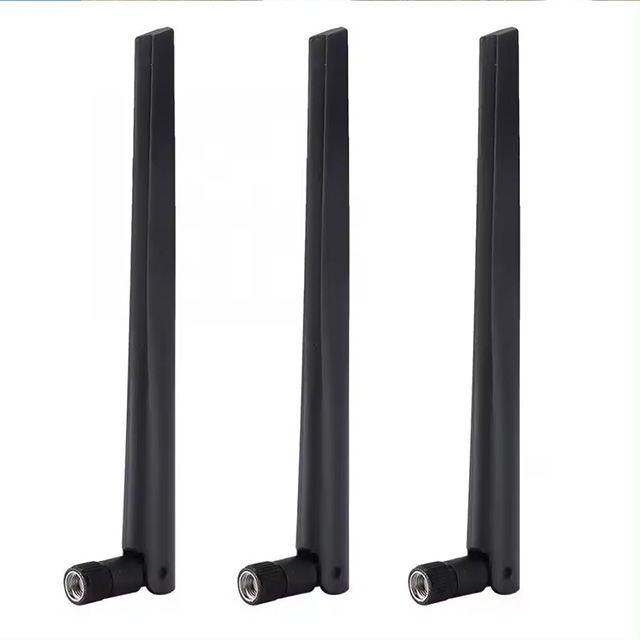
The 4G Built-in Patch Embedded Antenna is an ideal solution for device manufacturers requiring reliable, wideband cellular connectivity within a compact and non-obtrusive form factor. Designed to be mounted directly to the inside of a product enclosure, this antenna provides robust performance across the crucial 4G LTE (and often backward-compatible 3G/2G) frequency bands, ensuring global compatibility and high-speed data transfer.
This assembly features a rigid or semi-rigid Patch Antenna element—known for its efficiency and directional characteristics—coupled with an ultra-fine 1.13 Coaxial Cable. This combination allows for a minimal footprint and reliable signal transmission, making it perfect for applications like telematics units, asset trackers, industrial IoT gateways, and embedded cellular routers.
Embedded Efficiency: The Patch Antenna Design
The patch antenna is a highly efficient radiator characterized by its low profile and often quasi-directional pattern. This makes it an excellent choice for devices where the placement and orientation are relatively consistent.
Compact Footprint and Reliable Signal
The inherent design of a patch antenna—a metallic patch atop a ground plane—offers several benefits for embedded applications:
Low Profile: The thin, flat design minimizes the space required within the device enclosure, facilitating sleeker product designs.
High Efficiency: Patch elements are known for their high radiation efficiency compared to other small embedded antennas, translating to a stronger link quality without the need for high gain.
Wideband Coverage: Modern 4G patch antennas are meticulously engineered to resonate across the broad frequency range required by LTE networks (typically spanning from 700 MHz to 2700 MHz), ensuring compatibility with global carriers and various LTE bands.
The design is particularly effective when mounted on a flat, non-metallic surface, often serving as a highly effective radiating element for fixed or semi-fixed assets.
The Connectivity Standard: 1.13 Coaxial Cable
To maintain signal integrity and facilitate easy connection to the device's PCB, this antenna uses the industry-standard micro-coaxial cable assembly.
Ultra-Fine 1.13 Coaxial Cable
The 1.13 Coaxial Cable is the standard choice for embedded electronics due to its extremely small diameter and flexibility.
Space Saving: Its fine gauge is essential for routing the cable within the tightly packed interiors of telematics and IoT devices, navigating around other components like batteries and circuit boards.
Minimal Attenuation: Despite its small size, the cable provides effective shielding and low insertion loss over short lengths, ensuring the high-quality 4G signal captured by the patch element is delivered cleanly to the modem module.
Micro-Coaxial Connector Interface
The cable is universally terminated with a micro-coaxial connector (such as I-PEX or U.FL—connector type should be verified for the specific product).
Seamless Integration: This connector provides a simple, secure snap-on connection to the mating receptacle found on nearly all 4G LTE modules, modems, and embedded cellular gateways.
Durability: The locking mechanism provides a secure fit resistant to vibration and minor physical stress, critical for devices installed in vehicles or industrial environments.
Ideal Applications: Powering Modern Telematics
The 4G Built-in Patch Embedded Antenna is the preferred choice for manufacturers developing devices that demand reliable, continuous cellular connectivity while remaining discreetly installed.
Vehicle Telematics & OBD-II: Embedded inside vehicle tracking units for fleet management, diagnostics, and insurance applications.
Asset Tracking: Built into containers, logistics equipment, and machinery where the antenna must be hidden and protected from damage.
Industrial IoT Gateways: Providing cellular backhaul for sensor networks within factories, energy monitoring systems, and remote data collection sites.
Embedded Routers: Used in compact devices that provide Wi-Fi or local area connectivity via a cellular network.
Choose the 4G Patch Embedded Antenna with 1.13 Cable for a high-efficiency, wideband solution that maximizes the performance of your connected products while adhering to stringent space and aesthetic requirements.