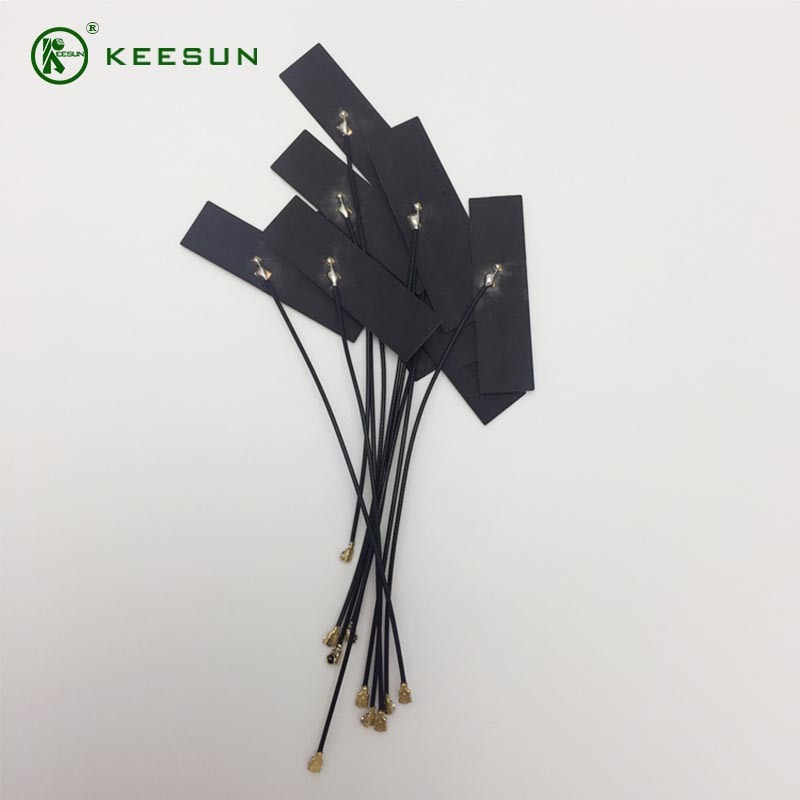
Ensure robust and reliable connectivity for your compact IoT and M2M devices with our specialized 900-1800MHz FPC Patch Internal Antenna. Engineered on a flexible printed circuit (FPC) substrate, this antenna is the ideal solution for devices that require high efficiency across the critical low- and mid-band cellular frequencies while prioritizing space and ease of integration. The included miniature 1.13 black coaxial cable and UF.L connector make this antenna ready for immediate, high-volume manufacturing integration into small terminals, asset trackers, smart meters, and remote monitoring systems.
Dual-Band Excellence for Global M2M/IoT
This internal antenna is precisely tuned to excel across two fundamental frequency blocks that form the backbone of global cellular IoT and machine-to-machine communication.
Low-Band GSM/GPRS (900 MHz): The antenna provides reliable performance in the 900 MHz band, which is crucial for legacy GSM/GPRS connectivity worldwide, particularly in Europe, Asia, and many other regions. This low frequency ensures excellent signal propagation, maximizing the operational range and penetration into buildings for static IoT devices like utility meters and remote sensors.
High-Band GSM/3G/4G (1800 MHz): The antenna is optimized for the 1800 MHz band, which is extensively used globally for high-capacity GSM, 3G, and foundational 4G LTE services. This dual-band coverage guarantees that your device maintains reliable connectivity when operating across different cellular networks and regions.
High Efficiency in a Small Footprint: Despite its diminutive size, the FPC patch antenna utilizes advanced design techniques to achieve high radiation efficiency and gain (typically 2dBi to 3dBi across the bands). This ensures that valuable battery power is effectively converted into radiated signal, maximizing the device's operational life and network reliability.
Consistent Impedance Matching: The antenna is carefully designed and impedance-matched to 50 Ohms, ensuring minimal power reflection (low VSWR) and maximum energy transfer to the radiating element. This attention to detail is critical for protecting the radio module and maximizing the performance of the antenna.
FPC Technology: Flexibility and Seamless Integration
Flexible Printed Circuit technology provides the crucial physical adaptability needed for modern, compact electronic enclosures.
Ultra-Thin and Adaptable: Constructed on a flexible polyimide film, the antenna can be gently curved or mounted along the internal contours of the host device's plastic casing. Its ultra-low profile is essential for modern product designs where internal space is a premium and traditional rigid antennas cannot be accommodated.
Peel-and-Stick Mounting: The antenna typically features a high-strength adhesive backing. This simplifies the manufacturing assembly process, allowing for quick, permanent, and reliable mounting to the inside surface of a non-metallic enclosure wall, significantly reducing labor time and complexity.
Designed for Isolation: When designing a small device, separating the antenna from noise sources (like batteries, processors, or metal components) is challenging. The FPC design allows the antenna to be strategically placed for maximum distance from internal noise, while the included cable ensures the radiating element is far from the host PCB.
Miniature Cable Assembly for Embedded Systems
The connection assembly is specifically chosen to facilitate robust, yet space-efficient, integration onto the device's main PCB.
1.13 Black Coaxial Cable: The antenna is connected via the 1.13 micro-coaxial cable. This cable is the industry standard for embedded systems due to its exceptionally small diameter (approx. 1.13 mm) and high flexibility. The black sheath ensures discreet integration within dark enclosures.
UF.L/IPEX Connector: The cable terminates with the miniature UF.L (also known as IPEX or MHF) connector. This interface is the de-facto standard for connecting internal antennas to compact wireless modules on the main circuit board. The UF.L connector is prized for its:
Minimal Footprint: Requires very little PCB real estate, saving valuable space.
Secure Connection: Provides a robust, snap-on connection that resists vibration common in portable and mobile applications.
Customizable Lengths: The 1.13 cable can be customized to precise lengths, allowing manufacturers to place the antenna in the optimal physical location within the enclosure while maintaining a direct, low-loss connection to the radio module.
Target Applications for Compact Cellular Devices
This high-performance, compact internal antenna is the ideal choice for developers focused on reliability and small form factor.
Smart Utility Metering: Ensuring reliable, long-term cellular communication (900 MHz) for remote reading and monitoring.
Handheld Scanners and Terminals: Providing robust connectivity without adding external bulk or potential points of failure.
Asset Trackers: Enabling compact and discreet integration into devices that monitor vehicles, equipment, or goods, leveraging both long-range and high-band cellular services.
Wearable IoT Devices: Its flexibility allows the antenna to conform to the tight physical constraints of advanced wearable technology.
The 900-1800MHz FPC Patch Internal Antenna delivers the necessary performance, flexibility, and global frequency support in a miniature package, making it the essential antenna component for accelerating the deployment of next-generation cellular IoT products.