RFID Antenna Technology: Principles, Characteristics, Application Scenarios and Development Prospects
In an RFID (Radio Frequency Identification) system, the antenna plays a crucial role as a bridge connecting electronic tags and readers. It is responsible for transmitting and receiving radio frequency signals, directly affecting the identification distance, accuracy, and stability of the RFID system.
I. Principles of RFID Antenna Technology
The core principle of RFID antennas is based on electromagnetic induction and electromagnetic wave propagation. When a reader transmits a radio frequency signal of a specific frequency, its antenna generates an alternating electromagnetic field. When an electronic tag enters the range of this electromagnetic field, the antenna on the tag generates an induced current due to electromagnetic induction, which powers the chip inside the tag. At the same time, the tag antenna reflects the information stored in the chip back to the reader in the form of electromagnetic waves. The reader's antenna receives this reflected signal and processes it, thereby completing the reading of the tag information.
For active tags, their antennas are mainly responsible for actively transmitting electromagnetic wave signals containing tag information to communicate with readers. Passive tags, on the other hand, rely entirely on the electromagnetic field generated by the reader's antenna to obtain energy and achieve signal interaction.
II. Characteristics of RFID Antenna Technology
(1) Frequency Adaptability
RFID systems operating at different frequency bands (low frequency, high frequency, ultra-high frequency, microwave) require antennas corresponding to their respective frequencies. For example, low-frequency and high-frequency RFID antennas usually adopt a coil form and work based on the principle of electromagnetic coupling; ultra-high frequency and microwave RFID antennas are mostly in the form of microstrip antennas, which transmit signals by means of electromagnetic wave propagation in space. The antenna must match the operating frequency of the system; otherwise, the signal transmission efficiency will be seriously affected.
(2) Directionality
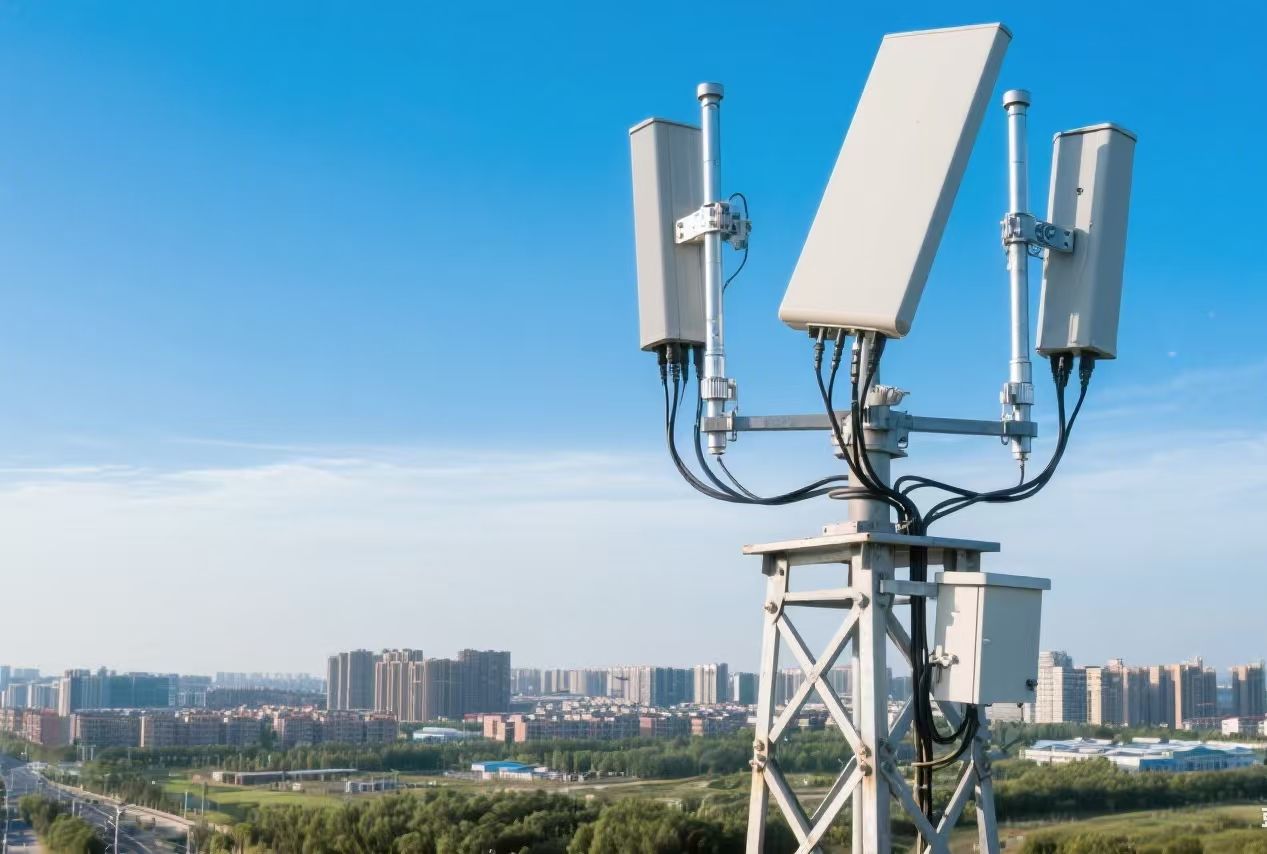
Some RFID antennas have a certain degree of directionality, that is, they have strong signal transmitting and receiving capabilities only in specific directions. Directional antennas are suitable for scenarios where identification of specific areas is required, as they can reduce external interference and improve identification accuracy; omnidirectional antennas can transmit and receive signals uniformly in all directions, making them suitable for occasions requiring large-range identification.
(3) Gain
Gain is a measure of the ability of an antenna to concentrate and radiate input power. The higher the gain, the stronger the ability of the antenna to transmit or receive signals, and the longer the identification distance. However, excessively high gain may lead to enhanced antenna directionality and a narrower coverage range. Therefore, it is necessary to select an antenna with appropriate gain according to specific application scenarios.
(4) Size and Form
RFID antennas come in various sizes and forms, which can be designed according to application requirements. For example, in some small electronic devices or items, micro-antennas need to be used; while on large objects such as logistics pallets and containers, larger-sized antennas can be used. In addition, the emergence of new forms such as flexible antennas and wearable antennas has further expanded the application range of RFID antennas.
(5) Anti-interference
In complex environments, RFID antennas need to have a certain anti-interference ability to reduce the impact of factors such as metals, liquids, and electromagnetic radiation on signal transmission. The anti-interference performance of the antenna can be improved by optimizing the structural design of the antenna and using special materials, ensuring the stable operation of the system.
III. Application Scenarios of RFID Antenna Technology
(1) Logistics and Warehousing
In the field of logistics and warehousing, ultra-high frequency RFID antennas are widely used. Installing directional or omnidirectional antennas at positions such as warehouse entrances, exits, and shelves can realize rapid identification and inventory of goods with RFID tags. For example, when goods pass through the warehouse entrance, the antenna can quickly read the tag information to realize automatic registration of goods in and out of the warehouse; the antenna installed next to the shelf can monitor the inventory status of goods in real-time, improving the efficiency of warehouse management.
(2) Retail Industry
High-frequency RFID antennas are often used in commodity management in retail stores. Installing high-frequency antennas at cash registers can realize rapid scanning and settlement of commodities with RFID tags; installing small antennas on shelves can monitor changes in commodity inventory in real-time and timely remind for replenishment when the quantity of commodities is insufficient, improving the intelligence level of retail operations.
(3) Transportation Field
In intelligent transportation, microwave RFID antennas play an important role. For example, in the ETC (Electronic Toll Collection) system, the microwave antenna installed at the toll station can communicate with the ETC tag on the vehicle to realize non-stop toll collection. In addition, in parking lot management, by installing RFID antennas, vehicles entering and exiting can be automatically identified and charged, improving the traffic efficiency of the parking lot.
(4) Medical and Health
In the medical field, high-frequency RFID antennas can be used for patient identification and drug management. By wearing wristbands with RFID tags on patients, medical staff can quickly read patient information through the antenna on handheld devices, ensuring the accuracy of medical operations; by pasting RFID tags on drug packaging, drugs can be identified and tracked through antennas, realizing the whole-process management of drugs and ensuring drug safety.
(5) Industrial Manufacturing
In industrial production lines, RFID antennas can be used for identification and tracking of components and products. By installing antennas at key nodes of the production line, real-time acquisition of production information and circulation status of components can be realized, achieving intelligent management of the production process and quality traceability.
IV. Development Prospects of RFID Antenna Technology
(1) Miniaturization and Integration
With the development of the Internet of Things technology, there are higher requirements for the miniaturization and integration of RFID tags, which also promotes the development of RFID antennas towards miniaturization and thinning. In the future, antennas will be more closely integrated with tag chips and carrier materials, suitable for the identification of more tiny objects, such as electronic components and medical devices.
(2) Application of New Materials
The research and development and application of new materials will bring new breakthroughs to RFID antenna technology. For example, the use of flexible materials and conductive inks can make antennas have better flexibility and printability, and can be made into antennas suitable for various complex-shaped objects, such as antennas attached to curved and wrinkled surfaces. At the same time, new materials may also improve the performance of antennas, such as enhancing anti-interference and increasing gain.
(3) Multi-band and Broadband
To adapt to the compatibility and collaborative work of RFID systems in different frequency bands, multi-band and broadband RFID antennas will become a development trend. Such antennas can work effectively in multiple frequency bands, reducing interference between different systems, improving the versatility and flexibility of RFID technology, and facilitating the collection and processing of various information in complex application environments.
(4) Intelligence and Adaptability
Future RFID antennas may have certain intelligence and adaptability. By integrating sensors and intelligent chips, the antenna can automatically adjust its parameters, such as frequency, gain, and directionality, according to environmental changes to adapt to different working environments and improve the stability and reliability of the system. For example, in an environment with strong interference, the antenna can automatically adjust the frequency to avoid the interference frequency band.
(5) Cost Reduction and Mass Production
With the continuous maturity of technology and the improvement of production processes, the production cost of RFID antennas will gradually decrease, and the mass production capacity will continue to improve. This will further promote the popularization and application of RFID technology in more fields, such as food traceability, library management, and anti-counterfeiting identification, providing strong support for the informatization and intelligent development of society.
In conclusion, as a key component of the RFID system, the continuous improvement of performance and innovative development of RFID antenna technology will lay a solid foundation for the wide application of RFID technology and play an increasingly important role in various industries.


