Are you tired of walking around your home or office, holding your phone up in a desperate search for a stable signal? Do dropped calls, glitchy video conferences, and painfully slow data speeds constantly interrupt your day? You're not alone. In our hyper-connected world, poor cellular reception is more than just an annoyance; it's a barrier to productivity and communication.
The most reliable solution to these problems is a cell phone signal booster system. These systems work by capturing the weak outside signal, amplifying it, and then rebroadcasting it indoors. At the heart of these systems are expertly engineered components, including amplifiers, cables, and antennas. For over a decade, specialized manufacturers like Shenzhen Keesun Technology Co., Ltd, founded in August 2012, have been perfecting the high-tech antennas and network cables that make seamless communication possible. This guide will focus on one of the most crucial components for indoor coverage: the panel antenna. We'll explore what it is, when you should use it, and how a high-quality flat panel antenna can permanently solve your reception issues.
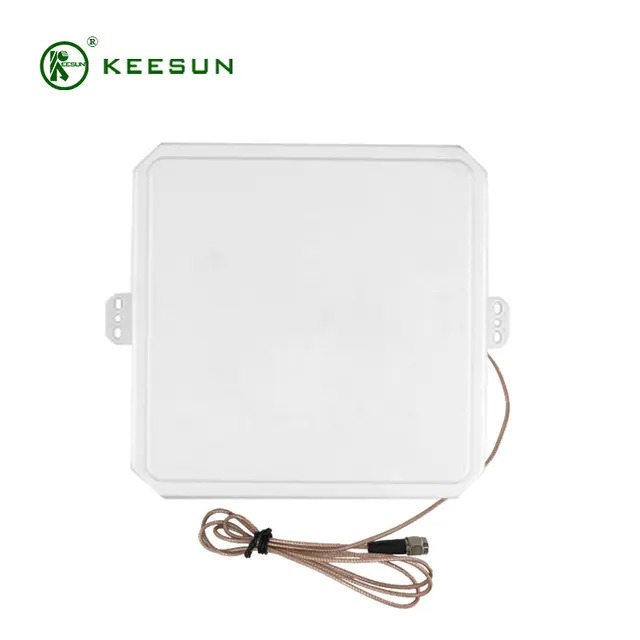
What Exactly is a Panel Antenna? Understanding the Basics
Before you can choose the right equipment, it's essential to understand what a panel antenna does. Think of it as a spotlight for your cell signal. While some antennas broadcast in all directions, a panel antenna is built for precision, making it a cornerstone of effective signal booster systems.
Defining the Directional Flat Panel Antenna
A panel antenna is a type of directional antenna. This simply means it is designed to send and receive radio frequency (RF) signals in a single, focused direction. Unlike an omnidirectional antenna that provides 360-degree coverage like a bare lightbulb, a panel antenna concentrates its power into a specific cone-shaped beam. This beam typically has a width between 45 and 70 degrees. This focused approach prevents signal waste and directs the amplified power exactly where it is needed most. Companies with deep expertise in wireless communications, like Keesun Technology, specialize in creating various types of directional antennae for fields ranging from cellular communication to satellite and radio frequency identification, ensuring that the design is optimized for its specific purpose.
How Does It Actually Boost Your Signal?
The magic of a panel antenna lies in its role within a complete signal booster kit. Its primary job is to take the powerful, amplified signal from the booster unit and rebroadcast it throughout your desired indoor area. Because its energy is concentrated, it can deliver a much stronger signal within its coverage beam.
This is directly related to a concept called "gain." In simple terms, gain is a measure of an antenna's ability to direct its power. A panel antenna has a higher gain than its omnidirectional counterparts. This higher gain allows it to "push" the signal further and more effectively penetrate common indoor obstacles that block cell reception. It receives the amplified signal from the booster and transmits it with focused strength, blanketing your priority areas in reliable coverage.
When to Choose a Panel Antenna: Top Use Cases and Scenarios
Understanding that a panel antenna is a directional powerhouse is the first step. The next is knowing when it's the right tool for your specific situation. Choosing a panel antenna is a strategic decision that depends on your building's layout, your coverage goals, and the materials you're up against.
For Homes and Offices with Priority Zones
Do you have a specific room where a strong signal is non-negotiable? This is the ideal scenario for a panel antenna. It's the perfect solution for targeting critical areas like a home office, a company conference room, a customer lounge, or the main living room where your family streams media. By directing the amplified signal squarely into these zones, you ensure maximum performance where it matters most.
Furthermore, a panel antenna excels in long, narrow spaces. If you need to cover a corridor, a hallway, or a long rectangular room, mounting a panel antenna on one of the shorter walls is incredibly effective. It will project the signal down the entire length of the space, providing end-to-end coverage that an omnidirectional antenna would struggle to achieve.
For Buildings with Signal-Blocking Materials
Often, the culprit behind poor reception isn't the distance from the cell tower but the very materials your building is made of. Modern construction often uses materials that are notorious for blocking RF signals, including:
In these challenging environments, a panel antenna is the superior choice. Its higher gain gives it a greater degree of signal penetration. It has the power to push the signal through these obstacles more effectively than a lower-gain dome antenna, turning a cellular dead zone into a communications hub.
When Your Existing Outside Signal is Weak
A cell phone signal booster can't create a signal out of thin air; it can only amplify what it receives from the outside. If the signal your outdoor antenna is capturing is already weak or mediocre, you need to make the most of every bit of amplification. This is another situation where a panel antenna shines. Its high-gain design ensures that the boosted signal is rebroadcast with maximum strength and integrity. As a general rule, the weaker your starting signal, the more you will benefit from the focused power of a panel antenna indoors.
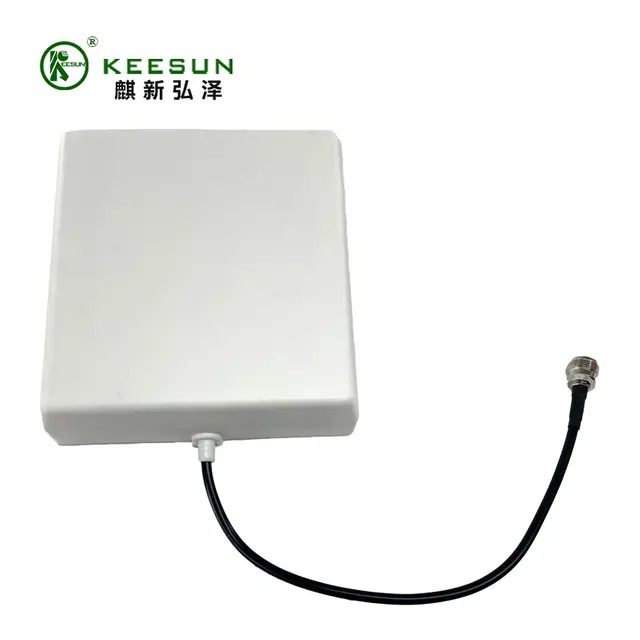
Panel Antenna vs. Dome Antenna: Which is Right for Your Space?
In the world of indoor antennas, the most common alternative to the panel antenna is the dome antenna. Both are excellent at broadcasting a boosted signal, but they are designed for very different applications. Choosing the correct one is critical for optimizing your signal booster system's performance.
Coverage Pattern and Placement
The fundamental difference comes down to their coverage patterns. As we've discussed, a panel antenna is directional, projecting a focused cone of signal. This makes it highly versatile in its placement; it can be mounted on a wall to target a specific room or hallway, or mounted on a ceiling to broadcast downward across a large floor or even penetrate to a level below.
A dome antenna, on the other hand, is omnidirectional. It's designed to be mounted on the ceiling in the center of a room and broadcasts a 360-degree, horizontal signal pattern, almost like a donut. This makes it ideal for large, open-concept spaces with standard-height or low ceilings, where the goal is to provide uniform, floor-wide coverage rather than targeting a specific zone.
Quick-Reference Comparison Table
To make the choice easier, here is a direct comparison of the two indoor antenna types:
| Feature | Panel Antenna | Dome Antenna |
| Best For | Priority areas, long/narrow rooms, weak outside signal, penetrating walls | Open-concept spaces, uniform floor coverage, low ceilings |
| Coverage | Directional, focused beam (45°-90°) | 360° horizontal broadcast |
| Mounting | Wall or Ceiling | Ceiling |
| Signal Strength | Higher gain for a stronger signal in a focused area | Even, uniform signal spread |
How to Install and Optimize Your Flat Panel Antenna
Proper installation is just as important as selecting the right antenna. A poorly placed panel antenna can fail to deliver the results you expect. Fortunately, setting up a flat panel antenna is straightforward, and following a few best practices will ensure you get peak performance from your signal booster system.
Strategic Installation for Maximum Coverage
There are two primary installation strategies for an indoor panel antenna, depending on your coverage needs:
Wall Mounting: This is the most common method for targeting specific rooms or long spaces. In a rectangular room or hallway, mount the panel antenna on one of the shorter walls. Aim it down the length of the space. This will project the signal beam to cover the entire area from end to end, ensuring strong reception throughout.
Ceiling Mounting: If your goal is to cover a large, open-plan floor or even provide a signal to a basement from the floor above, a ceiling mount is highly effective. By mounting the panel antenna on the ceiling and pointing it straight down, you create a large cone of coverage. The RF signal doesn't just stop where it hits the floor; it bounces off the floor and walls, scattering to fill a much larger area than the direct beam itself. Using this technique, a single panel antenna can effectively cover an area of 5,000 to 7,000 square feet.
Pro Tips for Peak Performance
To get the absolute best results, keep these optimization tips in mind during installation:
Precise Alignment: The direction you point your panel antenna matters. Make sure it is aimed directly at the center of your main coverage zone.
Minimize Signal Loss: The signal travels from your amplifier to your antenna through a coaxial cable. Using a high-quality, low-loss cable is essential to preserve signal strength. This is where partnering with a specialized OEM/ODM vendor like Keesun, who manufactures both antennas and the corresponding RF cables and assemblies, becomes critical. A quality cable ensures that the power from your amplifier reaches the panel antenna with minimal degradation.
Avoid Interference: Radio signals can be disrupted by other electronic devices or large metal objects. When placing your panel antenna, try to keep it away from Wi-Fi routers, major appliances, metal shelving, or filing cabinets to ensure the cleanest signal path.
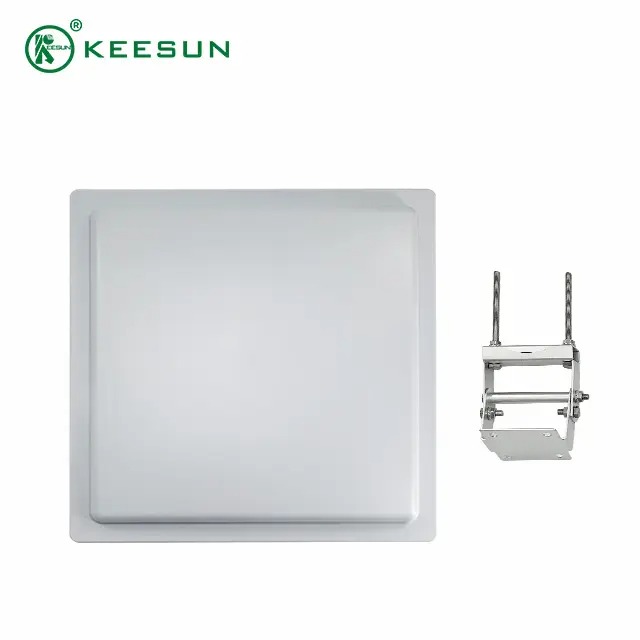
Exploring Different Types of Panel Antennas
While we've focused on the standard indoor panel antenna used in most signal booster kits, the technology is versatile and comes in several forms. Understanding these variations can help you appreciate the technology's breadth and identify what to look for in a high-performance model.
The High-Performance "Pro Flat Panel HD Antenna"
You might see terms like "Ultra Pro" or "HD" used to describe certain antennas. These aren't standardized technical terms but are generally used by marketers to denote a high-performance panel antenna. A quality pro flat panel HD antenna is distinguished by features that deliver a superior user experience. This includes a higher gain rating (often 10 dBi or more) for maximum signal strength and support for a wide range of frequencies. A modern, future-proof panel antenna will capably handle 3G, 4G LTE, and the latest 5G frequency bands, ensuring you have fast, reliable connectivity today and tomorrow.
Specialized Applications: The RFID Panel Antenna
The same principles that make a panel antenna great for cell signals are also used in other industries. An RFID panel antenna is a perfect example. It operates on different frequencies but uses the same directional technology to read RFID tags for applications like inventory tracking in a warehouse, asset management in a hospital, or logistics automation. While you wouldn't use this for your cell phone, it demonstrates the power and flexibility of directional antenna technology.
Single-Polarization vs. Dual-Polarization (MIMO)
This gets a bit more technical, but it’s a key trend, especially with 5G. Think of polarization as the orientation of the radio wave. A single-polarization antenna transmits waves in one orientation (either vertical or horizontal). A dual-polarization, or MIMO (Multiple Input, Multiple Output), panel antenna can transmit and receive in both orientations simultaneously. This is like turning a one-lane road into a two-lane highway—it dramatically increases data capacity and improves signal reliability. High-performance booster systems for 4G and 5G data often use a MIMO panel antenna to deliver the fastest possible speeds.
Frequently Asked Questions (FAQ)
Can I use a panel antenna by itself without a booster?
This is not recommended. A panel antenna is a passive device, meaning it has no power of its own. It is designed to work as one component in a complete signal amplifier system. While it could technically be connected directly to a device with a dedicated RF port, it would offer minimal benefit without an amplifier to boost the signal first.
Will a panel antenna work with 5G?
Absolutely. Modern signal booster kits and the antennas included with them are designed to be fully compatible with 5G networks. A high-quality panel antenna will effectively rebroadcast amplified 3G, 4G LTE, and 5G signals, ensuring you benefit from the latest network technology and its faster data speeds.
What is the difference between an indoor and outdoor panel antenna?
The vast majority of the time, a panel antenna is used as the indoor broadcast antenna within a signal booster system. However, some rugged, weatherproof panel antennas are designed for outdoor use as the donor antenna that captures the initial signal from the cell tower. While this is possible, a Yagi antenna is more commonly used for this outdoor purpose due to its extremely focused, high-gain properties.
Is a panel antenna always better than a dome antenna?
Not always—it depends entirely on your goal. A panel antenna is better if you need to deliver the strongest possible signal into a specific, targeted area or overcome signal-blocking building materials. Its higher gain makes it superior for these applications. However, if your goal is to provide even, uniform coverage across a wide, open-plan space with few obstructions, a dome antenna is often the more suitable and efficient choice.
Contact our team today to discuss your requirements and discover how our reliable, expertly engineered components can provide the connectivity you demand.


