Did you know that PCB antennas are crucial for seamless wireless communication in modern electronics? As devices become more compact, designing efficient PCB antennas is vital for connectivity. In this post, you'll learn about various PCB antenna types, design principles, and key considerations to optimize performance in your electronic projects.
Types of PCB Antennas
Printed Circuit Board (PCB) antennas come in several types, each offering unique features suited for different wireless communication needs. Understanding these types helps designers select the best antenna for their application.
Loop Antenna
Loop antennas consist of a conductive loop or coil printed on the PCB. They pick up magnetic fields and are often used in RFID and radio applications. Their compact design fits well in small devices, and they provide good efficiency in close-range communication. Loop antennas usually have a circular or rectangular shape and can be single or multiple turns.
Patch Antenna
Patch antennas are planar and consist of a flat conductive patch on one side of the PCB and a ground plane on the other. They offer directional radiation patterns and high gain, making them ideal for focused coverage areas. Patch antennas are common in Wi-Fi and cellular devices due to their compact size and good performance at higher frequencies.
Inverted-F Antenna (IFA)
The Inverted-F antenna features an “F” shaped radiating element printed on the PCB. It combines a ground plane and a shorted stub for compactness and effective radiation. IFAs are widely used in Bluetooth and mobile devices because of their small size and ease of integration into complex PCB layouts.
Monopole and Dipole Antennas
● Monopole Antenna: This type has a single conductive element, usually placed near the PCB edge, with the ground plane acting as the return path. Monopoles provide omnidirectional radiation and are simple to design, commonly used in IoT devices.
● Dipole Antenna: Consists of two conductive elements arranged opposite each other. Dipoles offer balanced radiation patterns and polarization diversity. They find use in applications requiring beam steering or multiple polarization modes.
Each antenna type affects the device’s size, radiation pattern, gain, and bandwidth. Designers must consider these factors alongside the operating frequency and PCB layout to achieve optimal wireless performance.
Design Principles for PCB Antennas
Designing PCB antennas requires a solid grasp of antenna geometry, substrate materials, and impedance matching techniques. These principles shape the antenna’s performance, efficiency, and integration ease.
Understanding Antenna Geometry
The antenna’s shape and size directly affect its radiation pattern, gain, and bandwidth. Geometry determines how the antenna resonates and emits electromagnetic waves. Common PCB antenna geometries include:
● Linear elements: Such as dipoles and monopoles, where length is typically a fraction of the wavelength.
● Planar patches: Like microstrip patch antennas, which use a flat conductive surface on the PCB.
● Loops: Circular or rectangular loops that pick up magnetic fields.
The physical length of the antenna often corresponds to a fraction (e.g., quarter or half) of the wavelength at the operating frequency. Designers must calculate dimensions carefully to tune the antenna for optimal resonance.
Substrate Material Selection
The PCB substrate acts as the antenna’s physical base and influences electrical performance. Key substrate properties include:
● Dielectric constant (εr): Affects the antenna’s effective wavelength and size. Higher εr shrinks antenna size but narrows bandwidth.
● Loss tangent: Represents dielectric losses; lower values improve efficiency.
● Thickness: Thicker substrates can enhance bandwidth but may increase surface wave losses.
Common substrate materials include FR4, Rogers, and ceramic-based laminates. FR4 is popular for cost-effectiveness but has higher losses than specialized materials like Rogers, which offer better performance for high-frequency antennas.
Impedance Matching Techniques
Effective impedance matching between the antenna and the transmission line minimizes signal reflections and maximizes power transfer. Mismatched impedance leads to reduced antenna efficiency and signal degradation.
Common matching methods include:
● Transmission line stubs: Open or shorted sections that compensate reactive components.
● LC matching networks: Using inductors and capacitors to create a bandpass filter matching antenna impedance.
● Tapered lines: Gradually changing impedance over a section of the feedline for broadband matching.
● Direct matching: When antenna impedance is purely resistive and matches the feedline (typically 50 Ω).
Choosing the right technique depends on antenna impedance characteristics and bandwidth requirements. Simulations and field measurements help refine the matching network for best results.
Key Design Considerations
Designing a PCB antenna requires careful attention to several critical factors that influence its performance. These include the frequency band and wavelength, antenna placement and layout, and the ground plane and keep-out areas. Each plays a vital role in ensuring the antenna works efficiently within the device.
Frequency Band and Wavelength
The frequency band determines the antenna's size and shape since the antenna length relates directly to the wavelength of the operating frequency. Wavelength (λ) is calculated by dividing the speed of light (c) by the frequency (f):
λ=fc
For example, at 2.4 GHz (common for Wi-Fi and Bluetooth), the wavelength is roughly 125 mm. The antenna size is often a fraction of this wavelength—such as a quarter or half wavelength—to resonate properly. Smaller antennas can be designed for higher frequencies due to shorter wavelengths.
Designers must ensure the antenna dimensions match the target frequency band to maximize radiation efficiency and minimize losses. Incorrect sizing can lead to detuning, poor gain, and reduced communication range.
Antenna Placement and Layout
Where the antenna sits on the PCB significantly affects its radiation pattern and efficiency. The ideal placement often is near the PCB edge or corner, where the antenna has more free space to radiate without obstruction.
Key points for placement:
● Edge or Corner Position: Offers clearance from other components and allows radiation in multiple directions.
● Avoiding Nearby Components: Components close to the antenna can cause detuning and electromagnetic interference.
● Orientation: The antenna's polarization and direction should align with the intended signal path for better reception.
The layout must also consider trace routing for the feedline, ensuring it is as straight and short as possible. Sharp bends or long traces increase signal loss.
Ground Plane and Keep-Out Areas
The ground plane acts as a reference and affects the antenna's impedance and radiation pattern. Its size and shape must be optimized for the antenna type and frequency.
Considerations include:
● Ground Plane Size: Should be large enough to support antenna operation but balanced with PCB size constraints.
● Keep-Out Area: A clear zone around the antenna free from metallic components or traces prevents interference.
● Isolation from Power Sources: Batteries or high-current traces near the antenna can degrade performance.
For antennas that depend on the ground plane (like monopoles), the ground acts as a counterpoise, balancing currents and shaping the radiation. Designers must ensure no components disrupt this function.
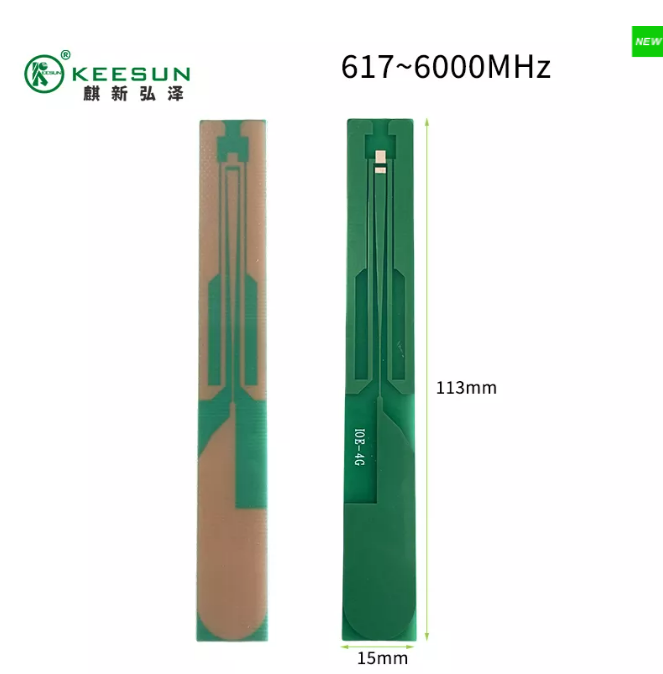
Calculating Antenna Parameters
Calculating the correct antenna parameters is a crucial step in designing efficient PCB antennas. These calculations help ensure the antenna resonates at the desired frequency, maintains proper impedance, and fits within the physical constraints of the PCB. Key parameters include the antenna's width and length, the trace width and length, and the width-to-depth ratio.
Width and Length Calculations
The width (W) and length (L) of a PCB antenna, especially for microstrip patch antennas, are directly related to the operating frequency and the dielectric constant of the substrate material. The antenna length typically corresponds to about half the effective wavelength (λeff) in the substrate, which depends on the dielectric constant (εr).
The width can be approximated with the formula:
W=2fcεr+12
where:
● c is the speed of light,
● f is the operating frequency,
● εr is the dielectric constant.
The effective length is slightly shorter than the physical length due to fringing fields, so a correction factor is applied to determine the actual length.
Trace Width and Length Considerations
The trace width and length of the feedline connecting the antenna to the transceiver affect impedance and signal loss. The trace width must be designed to achieve a characteristic impedance of typically 50 Ω to match the antenna and transmission line, minimizing reflections.
Trace width depends on the substrate thickness and dielectric constant and can be calculated using transmission line equations or design calculators. For example, a typical minimum trace width is around 0.625 mm (6 mils), but wider traces (0.254 mm or more) help reduce resistance and improve current handling.
Trace length should be kept as short and straight as possible to reduce resistance and signal attenuation. Longer or narrower traces increase losses and can degrade antenna performance.
Width to Depth Ratio
The width-to-depth ratio refers to the ratio of the microstrip trace width to the substrate thickness. This ratio influences the characteristic impedance and bandwidth of the antenna. For a 50 Ω impedance on an FR4 substrate, a width-to-depth ratio of approximately 2:1 is ideal.
Maintaining this ratio helps achieve the desired impedance and efficient radiation. Deviations can cause impedance mismatch, leading to reflected signals and reduced antenna efficiency.
Testing and Optimization
Testing and optimizing PCB antennas is essential to ensure they perform well in real-world conditions. This phase involves measuring antenna characteristics, improving efficiency, and meeting regulatory standards.
Performance Testing Techniques
Accurate testing verifies the antenna’s design and helps catch issues early. Common performance tests include:
● S-Parameter Measurements: Using a vector network analyzer (VNA), measure the reflection coefficient (S11) to assess how well the antenna matches the transmission line impedance. A low S11 value (below -10 dB) indicates good matching and minimal signal reflection.
● Radiation Pattern Measurement: This test maps the antenna’s radiation strength in different directions, showing its coverage area and gain. Anechoic chambers or open-field test ranges are often used for precise measurements.
● Gain and Efficiency Testing: Gain quantifies how well the antenna directs energy, while efficiency measures the ratio of radiated power to input power. These metrics help determine the antenna's effectiveness.
● Impedance Analysis: Checking input impedance across the operating frequency band ensures the antenna remains well matched, avoiding performance drops.
Optimization for Better Efficiency
After initial testing, optimization tweaks improve antenna performance:
● Impedance Matching Adjustment: Fine-tune matching networks or feedline dimensions to reduce reflections and maximize power transfer.
● Geometry Refinement: Slightly modifying antenna dimensions or shape can enhance bandwidth or gain.
● Ground Plane and Placement Tweaks: Adjusting the size or position of the ground plane and relocating the antenna on the PCB can reduce interference and improve radiation.
● Use of Matching Networks: Adding LC circuits or transmission line stubs can broaden bandwidth and improve efficiency.
● Material Selection: Switching to substrates with lower dielectric loss can reduce signal attenuation.
Iterative testing and optimization cycles are common until the antenna meets design goals.
Compliance and Certification
Before commercial use, antennas must comply with regulatory standards ensuring they operate safely and don’t cause interference. Key points include:
● Regulatory Bodies: Agencies like the FCC (USA), CE (Europe), and others set emission limits and testing requirements.
● Certification Testing: Includes electromagnetic compatibility (EMC), specific absorption rate (SAR), and spurious emissions tests.
● Documentation: Proper test reports and design files are needed for certification submissions.
● Design for Compliance: Early consideration of regulations avoids costly redesigns later.
Meeting these standards guarantees the antenna’s legal use and market acceptance.
Common Challenges and Solutions
Designing PCB antennas comes with its own set of challenges. These challenges often affect antenna efficiency, range, and reliability. Understanding them helps designers create better-performing antennas.
Interference Minimization
One of the biggest challenges is minimizing interference. PCB antennas operate in environments crowded with other electronic components and signals. Nearby components like processors, power supplies, or connectors can cause electromagnetic interference (EMI). This interference distorts the antenna’s signal, reducing communication quality.
To reduce interference:
● Maintain a keep-out area around the antenna free of metal parts or noisy components.
● Use ground planes strategically to shield sensitive areas.
● Implement filtering techniques in the matching network to block unwanted frequencies.
● Separate antennas operating on similar frequencies by sufficient distance or orientation (e.g., 90° or 180° apart) to reduce mutual coupling.
Proper PCB layout planning and shielding help ensure the antenna receives and transmits clean signals.
Proximity to Other Components
Placing the antenna too close to other PCB components can detune it or block radiation. Components with large metal parts, like batteries or connectors, reflect or absorb radio waves, degrading antenna performance.
Best practices include:
● Position the antenna near the PCB edge or corner, maximizing free space around it.
● Keep sensitive components like batteries, LCDs, or high-speed connectors away from the antenna’s near field.
● Follow recommended minimum distances based on component height and frequency.
● Avoid routing high-current traces or noisy signals near the antenna feedline.
This careful placement prevents detuning and maintains radiation efficiency.
Environmental and Material Considerations
Environmental factors and material properties also impact antenna performance. Materials near the antenna influence its effective dielectric constant, changing resonance frequency and bandwidth.
Key points:
● PCB substrate material: Choose low-loss materials with appropriate dielectric constants. FR4 is common but has higher losses than specialized laminates like Rogers.
● Enclosure materials: Metal enclosures block signals, so antennas should be placed away from them or use non-metallic casings.
● Plastic covers: Plastics with high dielectric constants can dampen signals and shift antenna frequency.
● Temperature and humidity: These can slightly alter material properties affecting antenna tuning.
Designers must account for these effects during simulation and testing to ensure stable performance in real conditions.
Future Trends in PCB Antenna Technology
As wireless technology advances rapidly, PCB antennas must evolve to meet new demands. Designers and engineers are exploring emerging materials, next-gen wireless integration, and innovations to boost antenna efficiency.
Emerging Materials and Designs
New materials promise to revolutionize PCB antenna design:
● Metamaterials: Engineered structures with unique electromagnetic properties allow antennas to shrink while maintaining performance. They enable novel shapes and tunable frequency responses.
● Flexible substrates: Fabrics or thin plastics with conductive inks create bendable antennas for wearable devices. These materials offer comfort and integration in curved surfaces.
● Fractal geometries: Complex, self-similar antenna shapes improve bandwidth and multi-frequency operation. They help pack more functionality into smaller footprints.
● Low-loss laminates: Advanced PCB materials like Rogers or ceramic-based substrates reduce signal loss, enhancing efficiency at high frequencies.
Such materials help antennas become smaller, more robust, and adaptable to various applications.
Integration with Next-Gen Wireless Technologies
Next-generation wireless standards like 5G, 6G, and beyond drive new antenna requirements:
● Millimeter-wave (mmWave) frequencies: Operating at 30 GHz and above, mmWave demands precise antenna designs with minimal loss. PCB antennas must adapt to these short wavelengths.
● Massive MIMO (Multiple Input Multiple Output): Systems use many antennas to increase data throughput. Compact PCB antennas with consistent performance are essential.
● Beamforming: Antennas steer signals directionally to improve range and reduce interference. PCB antennas with tunable elements or arrays support this.
● IoT and wearable tech: Demand ultra-low power, compact antennas integrated into small devices. Flexible and printed antennas fit well here.
Designers must consider these trends early to future-proof their antenna solutions.
Predicted Innovations in Antenna Efficiency
Improving efficiency remains a top priority. Innovations include:
● Active antennas: Incorporating amplifiers or tunable components directly on the PCB to dynamically adjust performance.
● AI-driven design: Using machine learning to optimize antenna geometry and matching networks faster than traditional methods.
● 3D printing and additive manufacturing: Allowing complex antenna shapes impossible with standard PCB fabrication.
● Multi-band and wideband antennas: Designs that cover several frequency bands seamlessly, reducing the need for multiple antennas.
These advances will enable smaller, smarter, and more efficient antennas tailored to diverse applications.
Conclusion
Designing PCB antennas involves understanding types, geometry, materials, and impedance matching for optimal performance. Key factors include frequency band, placement, and testing. Emerging materials and integration with new wireless technologies are shaping future trends. For reliable and efficient PCB antennas, consider Keesun's innovative solutions, offering cutting-edge designs and materials to enhance wireless communication.
FAQ
Q: What is a PCB antenna?
A: A PCB antenna is a type of antenna printed directly onto a printed circuit board, used in various wireless communication applications due to its compact and efficient design.
Q: How do you design a PCB antenna?
A: Designing a PCB antenna involves understanding antenna geometry, selecting substrate materials, and employing impedance matching techniques to optimize performance and integration.
Q: Why choose a loop antenna for PCB applications?
A: Loop antennas are ideal for PCB applications due to their compact size, good efficiency in close-range communication, and suitability for RFID and radio applications.
Q: What are the benefits of using patch antennas in PCB designs?
A: Patch antennas offer directional radiation patterns and high gain, making them ideal for focused coverage areas in Wi-Fi and cellular devices.
Q: How do PCB antennas compare to traditional antennas?
A: PCB antennas are more compact, cost-effective, and easier to integrate into devices compared to traditional antennas, making them suitable for modern electronics.


