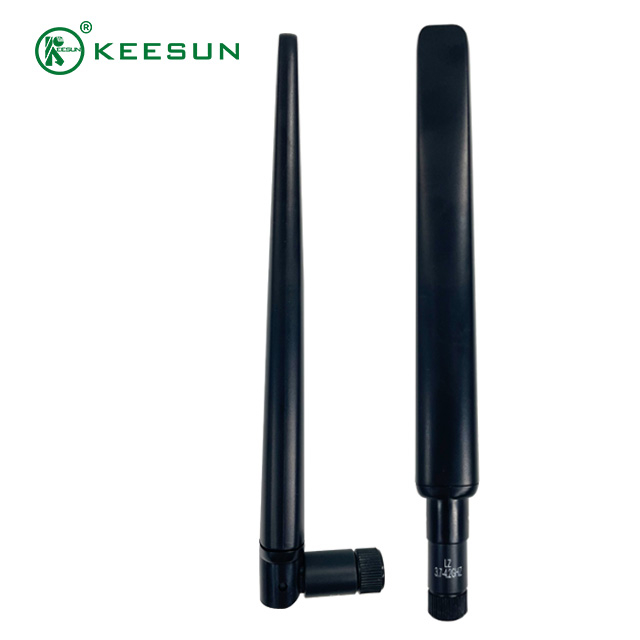
The 30±2 dBi High Gain Full-Range Quadrifilar Helix Antenna (QFHA) represents the pinnacle of specialized directional antenna technology, meticulously engineered to deliver exceptional performance across the entire Wi-Fi spectrum. This antenna is a game-changer for critical, long-distance wireless links, offering a powerful combination of extremely high gain, predictable radiation patterns, and circular polarization. It is designed for applications where standard antennas fail to provide the necessary range, penetration, and reliability.
Key Technical Specifications and Performance
The Quadrifilar Helix Antenna (QFHA) design is inherently complex but yields superior results, particularly in challenging propagation environments. Our high-gain model takes this technology to the extreme, delivering a precise, narrow beam essential for effective long-range links.
Exceptional 30 dBi Gain and Focused Beamwidth
The core feature of this antenna is its remarkable 30pm 2 dBi gain. This ultra-high gain is achieved through the antenna's precisely phased and spatially arranged helical elements, which concentrate the radiated power into an extremely narrow and focused beam. The resulting beamwidth is very tight, typically only a few degrees, making this antenna highly effective for point-to-point (PtP) links over distances often measured in tens of kilometers. This focused energy ensures maximum power transfer to the distant receiver, dramatically improving the link budget and overcoming high path loss.
Full-Range Wi-Fi Frequency Coverage
The antenna is designed to cover the full range of standard Wi-Fi frequencies, ensuring compatibility with diverse wireless standards and avoiding the need for multiple single-band antennas. While exact frequency coverage may vary by model, a "Full-range Wi-Fi" specification typically implies coverage across the primary 2.4 GHz (2400-2485MHz) and 5 GHz (5150-5875MHz) bands, though some high-gain QFHAs may be optimized for one band to maximize gain. The assembly maintains excellent VSWR (Voltage Standing Wave Ratio) across its operational bandwidth, ensuring that maximum power is transmitted and minimal power is reflected back to the radio.
Circular Polarization (CP) for Superior Link Stability
A critical technical advantage of the Quadrifilar Helix design is its circular polarization (CP). Unlike linearly polarized antennas, CP mitigates the signal fading caused by multipath interference and Faraday rotation—issues that are especially prevalent over long distances and in environments with heavy foliage or reflections. Circular polarization ensures that the signal quality remains stable regardless of the physical orientation or movement of the receiving antenna (within reasonable limits) or changes in the propagation medium. This results in fewer dropped packets, higher link stability, and consistently better data rates than achievable with linearly polarized antennas of comparable gain.
Robust Construction for Harsh Environments
Built to withstand continuous outdoor exposure, the antenna features a rugged, UV-stabilized, weather-resistant radome and corrosion-proof mounting hardware. Its mechanical integrity is designed to endure extreme wind loading, temperature variations, and environmental abrasion, ensuring a long operational lifespan and minimal maintenance requirements in remote installations.
Practical Applications and Usage Scenarios
The unique combination of ultra-high gain, focused beam, and circular polarization makes this QFHA an indispensable tool for highly specialized and mission-critical wireless applications.
Long-Distance Point-to-Point (PtP) Links
The most common and impactful use of this antenna is for establishing extremely long-distance point-to-point wireless backhaul. It is deployed to connect remote enterprise locations, industrial sites, or cellular base stations that are geographically isolated from the main network infrastructure. For ISPs and WISPs (Wireless Internet Service Providers), this antenna is key to extending broadband services to remote rural communities where running fiber is prohibitively expensive. The 30dBi gain enables reliable links over distances that typically require costly microwave dishes.
Wireless Video Surveillance and Security Backhaul
In large-scale security and video surveillance networks, this antenna provides the necessary stable, high-throughput link to send high-resolution camera feeds from remote monitoring locations back to a central command center. Its circular polarization is particularly effective here, as it maintains video quality and minimizes dropouts caused by environmental factors. It is essential for securing large perimeter areas, border monitoring, and remote utility pipelines.
Drone and Unmanned Systems Communication
For high-altitude, long-endurance Unmanned Aerial Vehicles (UAVs) and specialized drone operations, the QFHA can be used on ground control stations. Its high gain ensures a robust, reliable command-and-control link over vast operational ranges, while its circular polarization helps maintain the link despite the changing orientation of the airborne platform. This is critical for military, search-and-rescue, and scientific data acquisition missions.
Specialized Scientific and Telemetry Applications
This antenna is well-suited for scientific data telemetry and specialized monitoring systems, such as connecting remote weather stations, environmental sensors, or geological monitoring equipment to a centralized data collection point. In these critical applications, the antenna's narrow beam helps exclude unwanted interference, and the high gain ensures that even low-power data transmissions from distant sensors are reliably received.
Why Choose Our 30 dBi QFHA? (SEO Focus)
Ultra-High 30 dBi Gain: Achieve unprecedented distance and throughput for long-range Wi-Fi backhaul.
Stable Circular Polarization: Eliminate signal fading from multipath and reflections, guaranteeing superior link stability.
Mission-Critical Reliability: Built for extreme environments, ensuring continuous, high-performance operation.
Focused Narrow Beam: Maximize signal directionality and minimize interference from side lobes.